Accessibility plan
Welcome to North Vancouver City Library’s (“City Library”) Accessibility Plan. This plan outlines our commitment to creating a more inclusive and accessible library that meets the needs of our community members with disabilities.
In addition to highlighting our accessibility accomplishments, it spotlights key accessibility strategies that relate to our larger inclusion and equity goals. The work ahead section (p. 23) details our ongoing efforts to identify and address barriers, foster inclusivity, and ensure equitable access to our spaces and services.
We are committed to building a library that is welcoming, inclusive, and accessible to all. This plan reflects our dedication to making meaningful progress toward a more accessible future for all members of our community.
Acknowledgements and key information
Territory acknowledgement
North Vancouver City Library is located on the traditional, ancestral, and unceded territories of the Skwxwú7mesh Úxwumixw (Squamish Nation) and səl̓ ílwətaʔɬ (Tsleil-Waututh Nation). As a memory and learning institution that is committed to truth and reconciliation, North Vancouver City Library respectfully acknowledges the land and the Indigenous Peoples who have cared for these lands since time immemorial.
Accessibility statement
This document is accessible to PDF/UA standards.
Language in this plan
We acknowledge that the language surrounding disability is always evolving. And we also understand that preferences for terminology vary. To recognize preferences, this document alternates between “person-first” and “identity-first” language. “Person-first” means acknowledging the individual before the disability. For example, saying “person with a disability”. This reflects the belief that disability is separate from the person, and not a defining feature. “Identity-first” means acknowledging the identity before the person. For example, saying “disabled person”. This reflects the belief that disability is an inseparable and inherent part of the person’s identity. We also recognize that using an individual’s preferred terminology is best practice when communicating with them directly.
How to give us accessibility feedback
There are multiple ways to give us feedback on this Accessibility Plan or the accessibility of North Vancouver City Library. You can:
- Fill out our accessibility feedback form that is on our website.
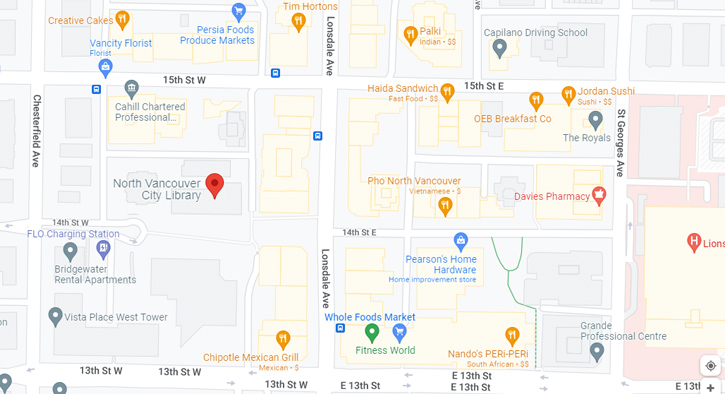
- Visit us in-person at 120 14th Street West and speak to a library staff.
- Email us at accessibility-feedback@nvcl.ca.
- Phone and leave us a voicemail at 604-998-3489.
- Participate in survey or public engagement opportunities.
- Send us a letter to:
Manager of People, Finance and IT
North Vancouver City Library
120 14th Street West
North Vancouver, BC
V7M 1N9
About this plan
Welcome to North Vancouver City Library’s (“City Library”) Accessibility Plan.
This plan outlines our commitment to creating a more inclusive and accessible library that meets the needs of our community members with disabilities. In addition to highlighting our accessibility accomplishments, it spotlights key accessibility strategies that relate to our larger inclusion and equity goals.
The work ahead section (p. 23) details our ongoing efforts to identify and address barriers, foster inclusivity, and ensure equitable access to our spaces and services. We are committed to building a library that is welcoming, inclusive, and accessible to all.
This plan reflects our dedication to making meaningful progress toward a more accessible future for all members of our community.
Key terms and concepts
This section includes key terms and concepts that are relevant to this plan.
Disability
According to the Accessible BC Act, disability is an interaction between an impairment and a barrier that prevents or reduces someone’s ability to fully and equally participate. This is a practical definition because we control many of the barriers in our library. We can proactively identify, remove and prevent them to make our spaces and services more accessible.
Impairment
The Accessible BC Act describes impairment as physical, sensory, mental, intellectual, or cognitive conditions. The Act also recognizes that impairments can be permanent, temporary, or episodic. Although the Act uses this term to describe part of the disability experience, it is not widely used in the disability comunity. It’s not common practice to describe someone as being “impaired” or as having an “impairment”. For many disabled people, this language has a negativeconnotation that implies there’s a better way to be. For this reason, we will not be using the term impairment in this plan. We will use “disability” and “disabled” to reference the disability experience.
Barrier
According to the Accessible BC Act, a barrier is anything that hinders someone’s full and equal participation in a particular context. Barriers can be caused by:
- Physical environment – for example, harsh lighting in a library that impacts the sensory experience, or hard flooring that creates excessive noise or poses a slip risk.
- Attitudes – for example, when library staff communicate exclusively with a person’s support person, interpreter or companion because they assume the person with a disability cannot understand or interpret what’s being communicated.
- Policies and practices – for example, when a library does not prioritize accessibility in event planning for their community.
- Information – for example, when a library shares updates about their events and services in a printed newsletter, without any other options.
- Communications – for example, sourcing digital library materials that are not compatible with screen readers.
- Technology – for example, when a library has no accessible computer stations or equipment available.
Barriers can also be affected by intersecting forms of discrimination, such as racism, sexism, ageism, etc.
Accommodation
Accommodation is a specific adjustment or modification made to address a single barrier for a disabled person. Accommodations are usually initiated at the request of the person. The goal is to ensure they can fully and equally participate, contribute, or engage.
For example, a library customer may request captioning for a virtual event hosted by the library. The library can fulfill this accommodation request by enabling captions in the virtual event software or hiring a captioning service.
Accessibility
Accessibility is the intentional and proactive work we do to identify, prevent and remove barriers for people with disabilities. According to the World Health Organization’s World Report on Disability (2011), accessibility ensures that environments, services, and products can be accessed by as many people as possible – in particular, disabled people.
If we re-visit our accommodation example about captions, we see how the person with the disability had to identify the barrier and initiate the request to have it addressed. The library’s response to set up captioning is reactive. Accessibility is a proactive approach. To plan and host a more accessible event, the library would have considered that some attendees require captions to fully engage. Organizers would have built the captioning into the event plan and then communicated this accessibility feature in the event information.
With an accessibility focus, organizations like libraries take on the responsibility of creating environments, services, and products that work for as many people as possible. This takes the pressure off disabled people to constantly have to initiate the accommodation process to ensure their own access.
Accessibility versus accommodation
Accessibility and accommodation are not the same thing. While the goal is full accessibility, there will always be situations where accommodations are necessary. Even in highly accessible organizations, individuals may have unique needs that require specific support. Striving to be as accessible as possible should go hand in hand with actively welcoming and providing accommodations as needed.
Designing with accessibility in mind reduces the need for individualized accommodations. This saves time and resources in the long term. Moreover, accommodations can serve as opportunities to further enhance accessibility. You can turn them into features that benefit everyone.
Ableism
Ableism encompasses attitudes, beliefs and behaviors that marginalize or discriminate against people with disabilities. It’s a form of oppression based on the assumption that non-disabled people are inherently superior to disabled people. This bias is deeply embedded across all levels of society.
Systemic ableism results in accessibility being treated as an afterthought. It’s why services, environments and products are often designed without considering the needs of people with disabilities.
About us
North Vancouver City Library is a landmark building located on the traditional, unceded lands of the Coast Salish Peoples, including the territories of the Skwxwú7mesh Úxwumixw (Squamish Nation) and səl̓ ílwətaʔɬ (Tsleil-Waututh Nation), and in the heart of the City of North Vancouver.
Our purpose is to provide welcoming spaces and innovative services that connect people to information, ideas, and one another.
Purpose
We provide welcoming spaces and innovative services that connect people to information, ideas and one another.
Vision
A trusted place for everyone to learn, grow and belong.
Inclusion as a core value
Inclusion is at the core of who we are. It’s an organizational value that guides our decision-making.
With inclusion as a driver, we work to embed equity, diversity, inclusion, and accessibility in all that we do. We actively work to reduce barriers and strengthen understanding and access for everyone who uses our library.
Our other organizational values include:
- Intellectual freedom: We uphold and facilitate free and equitable access to knowledge and ideas in all their forms. We respect and defend individual rights to privacy and choice.
- Service: We put our community at the center of everything we do. We engage with community members to understand their needs, and delivery innovative services that satisfy and delight.
- Responsibility: We value the trust our community puts in our library and hold ourselves to high standards of accountability, integrity, and transparency.
- Truth and reconciliation: We are guided by the principles of reconciliation and work to honor Indigenous ways of knowing, being, and doing in our relations and services.
Guiding principles
Our guiding principles define how we do our work:
- We advance sustainability: We achieve maximum social impact with minimum environmental impact and deliver services in a financially responsible manner.
- We meet people where they are at: We approach one another with curiosity, kindness and respect, and recognize that we are each shaped by unique experiences.
- We work in collaboration and partnership: We work with our partners to align services, share resources and achieve collective impact while building on our unique strengths.
- We strive to balance competing pressures: We work to find the balance between traditional and emerging services and among the different needs of diverse customers.
- We are resourceful: We adapt and respond, drawing on a shared understanding of our purpose. We encourage creativity and experimentation, and we learn from experience.
Strategic priorities
In our 2025-2029 Strategy Plan, we outline three strategic priorities to achieve our vision and reflect our values:
- Champion thinking, learning, and reading Under this priority, we aspire to be a source of wonder, discovery and insight. We want diverse collections, inspiring programs, and flexible physical and digital spaces that support lifelong learning for everyone. Through the support of our library, our vision is that people will develop digital, media, and information literacies and critical thinking skills to safely and successfully navigate a complex technology and information landscape.
- Strengthen inclusion and belonging Under this priority, we aspire to be a trusted space that promotes discussion, understanding, and engagement. We wish to see all members of our community reflected and included in the library, through inclusive and barrier-free access to services and resources. We want everyone to 10 feel a sense of belonging so they can make connections to their community and one another.
- Enhance capacity and capability Under this priority, we aspire to evolve and grow with our community so we can deliver relevant services that support community well-being. We will make our physical and digital infrastructure robust, sustainable, and responsive to the needs of library users. Our staff will feel capable and supported in their work. Grounded in a clear and shared purpose, we will be ready and able to meet emerging needs and unexpected circumstances.
What guides our accessibility work?
Organizational priorities
Accessibility is a key part of our library’s vision and values. With inclusion as a driver for all that we do, we are constantly working to ensure our services and spaces meet everyone’s needs. This is reflected in the priorities and actions outlined in our 2025-2029 Strategic Plan, Inclusion Action Plan and Framework, and Indigenous Cultural Safety Plan.
These plans provide a foundation for our accessibility work. They also offer opportunities to identify more specific actions to better serve disabled community members.
2025-2029 Strategic Plan
The priority areas in our 2025-2029 Strategic Plan provide a solid framework to advance accessibility. The first area, “champion thinking, learning and reading” ensures diverse and inclusive collections and programs, accessible physical and digital spaces, and accessible digital and media literacy efforts.
The second area, “strengthen inclusion and belonging” creates welcoming environments, removes barriers to participation, and fosters dialogue about diverse experiences, including those of people with disabilities.
The third area, “enhance capacity and capability” focuses on developing accessible, sustainable infrastructure, equipping staff with training and tools, and anticipating the evolving needs of disabled community members.
Together, these priority areas embed accessibility into the library’s core values, fostering inclusivity and ensuring full engagement and participation for all.
Inclusion Action Plan and Framework
Another key organizational plan is our Inclusion Action Plan and Framework. It outlines commitments to nurturing connection and belonging, and embedding equity, inclusion, accessibility, and reconciliation into decision-making, spaces, services, and programs. There are actions across five pillars:
- Governance: Actions focus on inclusive board practices through diversity training, accessible policies, and psychological safety.
- Staff: Actions emphasize training, accessible hiring, and creating a supportive workplace.
- Operations: Actions enhance physical, sensory, and digital accessibility through improved signage, sensory-friendly spaces, and multilingual materials.
- Programs and services: Actions amplify diverse voices through inclusive programming, cultural learning, and harm reduction.
- Community connections: Actions focus on strengthening outreach to underserved groups, fostering partnerships, and promoting Indigenous-led initiatives.
These actions guide our efforts to create an inclusive, accessible library for all.
Indigenous Cultural Safety Plan
Our Indigenous Cultural Safety Plan highlights key information and practices to support library staff to develop cultural humility and contribute to cultural safety for Indigenous colleagues and library users. Actions in the plan include:
- We acknowledge the land.
- We use self-location to position ourselves in conversations and relationships.
- We honour and respect Host Nations.
- We learn, practice, and use the languages of Host Nations.
- We recognize the unique and distinct languages, cultural practices, and diversity of Indigenous peoples.
- We support and uplift Indigenous stories, art, and culture.
- We prioritize relationships – “relations first”.
- We compensate Indigenous people for their work.
- We take responsibility for our own learning.
- We learn, unlearn, and relearn.
- We strive to identify and interrupt our own biases.
- We hold one another accountable, and we hold one another up.
- We work to identify and remove barriers to good relations.
- We implement the Calls to Action.
- We show up and participate.
- We pay attention to language.
- We support a culturally safe workplace.
These actions provide another powerful framework to guide our accessibility efforts. They help us foster a culture of continuous learning, accountability, inclusion and accessibility.
By identifying biases, removing barriers and supporting a culturally safe workplace, we create spaces that are not only accessible but also respectful of diverse needs and experiences. Together, these actions inspire a holistic approach to accessibility rooted in equity, respect, and shared responsibility.
Accessible BC Act
On a more practical level, we are guided by the requirements, principles and standards outlined in the Accessible BC Act.
Requirements
The Accessible BC Act requires prescribed organizations, such as libraries, to comply with three requirements:
1. Form an accessibility committee to support the organization identify, address, and prevent barriers. At least half of the committee’s membership must include people with lived experience of disability.
2. Develop an Accessibility Plan to outline the organization’s approach to identifying, addressing, and preventing barriers.
3. Create a public feedback system to gather input from individuals about the challenges they face when engaging with the organization.
This Accessibility Plan is our response to the second requirement. The next section, “Consultation”, on page 17 provides information on how we are complying with the first and third requirement.
Principles
To guide this work, the Accessible BC Act highlights six principles, which have been defined by the Disability Alliance of British Columbia in their Developing Your First Accessibility Plan guide:
- Inclusion: All British Columbians, including persons with disabilities, should be able to participate fully and equally in their communities.
- Adaptability: Accessibility Plans should reflect that disability and accessibility are evolving concepts that change as services, technology, and attitudes change.
- Diversity: Every person is unique. People with disabilities are individuals with varied backgrounds. Individual characteristics including race, gender, sexual orientation, religion, and lived experience greatly inform the experiences of each person. Accessibility Plans should acknowledge the principle of intersectionality and the diversity within the disability community.
- Collaboration: Promoting accessible communities is a shared responsibility and everyone has a role to play. Accessibility plans should create opportunities for organizations and communities to work together to promote access and inclusion.
- Self-determination: Accessibility Plans should seek to empower people with disabilities to make their own choices and pursue the lives they wish to live.
- Universal design: The Centre for Excellence in Universal Design defines this as “the design and composition of an environment so that it can be accessed, understood, and used to the greatest extent possible by all people…” An Accessibility Plan should be designed to meet the needs of all people who wish to interact with the organization.
We have considered these principles in the development of this plan.
Future standards
The next phase of the Accessible BC Act is the development and release of accessibility standards. These will be shaped collaboratively by the provincial government, its accessibility committee, and various technical committees. As a result of these efforts, we will see specific regulations in the following areas:
- Employment
- Service delivery
- Built environment
- Information and communications
- Transportation
- Health
- Education
- Procurement
As further guidance from the province on how to be accessible in the areas that are relevant to our library, we will update our plan in accordance and where applicable.
Consultation
Our accessibility work will prioritize the lived experience of people with disabilities. To ensure consultation with the disability community, we are using the following approaches.
Engaging the North Shore Accessibility Advisory Committee
This pre-existing committee supports the North Shore communities to remove barriers and improve overall accessibility for residents, staff and other disabled community members. In alignment with the Accessible BC Act, its role is to advise the three partner municipalities, including municipal entities like the library, as they work to:
- Identify barriers that people experience when interacting with the municipalities.
- Remove and prevent these barriers.
- Develop and update their accessibility plans.
City Library intends to engage the committee annually around barriers that have been identified, actions that have been prioritized, and outcomes that have been achieved.
Engaging the Public Library InterLINK Sectoral Advisory Committee
Libraries in the Metro and Sea to Sky region also collaborate through their Federation, known as Public Library InterLINK. This body is in the process of creating a sectoral advisory committee which will also be compliant with the membership requirements of the Accessible BC Act. Member libraries can consult this committee and receive its guidance once it launches.
The advantage of using the North Shore Accessibility Advisory Committee and a sectoral advisory committee is that both will bring a different perspective. The North Shore committee will share local perspectives, providing feedback that aligns with our municipality in terms of facility and municipal planning. A sectoral advisory committee will share sector-specific insights that will help us plan more accessible services.
Creating a City Library Accessibility Committee
We are working to establish an internal City Library Accessibility Committee, which will provide information and education to staff about accessibility, review feedback from the community and staff, and support the library’s leadership team on the identification, removal and prevention of barriers.
Creating and utilizing an accessibility feedback mechanism
We are in the process of creating an accessibility feedback mechanism, which will provide numerous options for submitting feedback. This mechanism will be available on our website.
Continuing our public consultation on accessibility using existing feedback channels:
Additionally, the library has numerous existing mechanisms for public feedback, including:
- In-person
- Online
- Phone
- Surveys and public engagements
As part of our approach for collecting public feedback, we will capture and track all accessibility-related feedback that we received through these channels.
Accessibility work we have done
We’ve introduced a range of services and features to meet diverse accessibility needs:
- Accessible collections: Our offerings include large print books, audiobooks, and dementia-friendly kits to ensure access for individuals with print disabilities or cognitive challenges. We also lend DAISY Players (Digital Accessible Information System) and collaborate with the National Network for Equitable Library Services (NNELS) and the Centre for Equitable Library Access (CELA) to expand access to library materials.
- Accessibility technology: We provide accessible eBook formats through Overdrive and host training sessions in partnership with the CNIB (Canadian National Institute for the Blind) Foundation, empowering customers to use assistive devices effectively.
- Enhanced services: We also offer special accommodations, such as home delivery for individuals with mobility challenges and tailored technology support.
- Inclusive facilities: We’re working to create a truly inclusive library facility. As part of these efforts, we have included new features like the hearing loops in our largest program room and our recording station’s accessible ramp. We also did a building audit with the Rick Hansen Foundation in 2015 and are in the process of working with SPARC BC (Social Planning and Research Council of BC) on a more comprehensive audit of our facility.
Accessibility-focused goals and actions
Additionally, our Strategic Plan and Inclusion Action Plan and Framework identify accessibility-focused goals and actions.
Strategic Plan accessibility goals
The Strategic Plan focus area “strengthen inclusion and belonging” lists the following accessibility-focused goals:
- Identify and dismantle barriers to library spaces and services.
- Create vibrant, engaging, and accessible physical and digital spaces.
The focus area “enhance capacity and capability” lists this goal:
- Provide accessible, resilient, and well-maintained library facilities, infrastructure, and technology.
Inclusion Action Plan and Framework actions
- The governance goal “support library board trustee knowledge and skills with respect to diversity, equity, and inclusion” lists this accessibility-focused action:
- Include learning and discussion about diversity, equity, inclusion, accessibility and/or the principles of reconciliation in the Board’s annual development plan.
- The staff goal “develop staff and supervisory skills, capabilities and capacity with respect to diversity, equity and inclusion” lists this accessibility-focused action:
- Train all staff on mental health first aid.
- The operations goal “increase accessibility in the library facility, including physical, sensory and linguistic accessibility” lists the following accessibility- focused actions:
- Assess current signage and wayfinding and identify improvements.
- Engage community members with disabilities to develop an accessibility plan that includes the facility and services.
- Incorporate braille, sign language, closed captioning, descriptive video and images into communications where possible.
- Offer a discreet method for the public to access help if feeling uncomfortable.
- Increase availability of sensory-friendly spaces and times.
- Translate key library information and events into most spoken languages.
- Integrate tools for point-of-need translation at all service points.
- Use icons and other visuals as alternatives or in addition to words when possible.
The operations goal “improve accessibility of digital spaces, resources and documents” lists the following accessibility-focused actions:
- Review accessibility of website regularly to ensure we are meeting current standards.
- Review accessibility of other online resources we promote or provide access to.
- Adopt standards for accessible documents in all internal and external communications.
The operations goal “facilitate a sense of community connection and belonging in library spaces” lists this accessibility-focused action:
- In customer surveys or input mechanisms, ask about connection, belonging, and inclusion, as well as barriers to these areas.
The programs and services goal “reduce barriers to access in library programs and services”, lists the following accessibility-focused actions:
- Create and implement an accessibility checklist for library programs and services.
- Create a simple adaptation to name tags (for example, a sticker) that indicates a skill that employee has and is willing to use or speak to. These could indicate Language, ASL, safe haven trained, etc.
The programs and services goal “increase access to community social supports within the library setting” lists this accessibility-focused action:
- Develop a harm reduction strategy.
Our approach for this Accessibility Plan
To develop this Accessibility Plan, we took a structured approach to ensure alignment with our library’s broader inclusion and equity goals. Our approach followed four main steps:
- Strategic review: We reviewed our 2025-2029 Strategic Plan and Inclusion Action Plan and Framework. This was a high-level review that focused on how accessibility can be integrated into the library’s inclusive vision. Opportunities to highlight a clear accessibility focus were identified.
- Defining accessibility goals: Based on the identified opportunities, we developed four overarching goals to guide our accessibility efforts:
- Goal 1: Foster meaningful connections with the disability community by utilizing accessible engagement strategies to understand and address the complex needs of all community members.
- Goal 2: Ensure that all library spaces and services are inclusive, accessible, and provide equitable access for all community members.
- Goal 3: Amplify disability representation, including intersectional perspectives, throughout library spaces, services, and programs.
- Goal 4: Embed accessibility into the library’s governance structures, operations, and workplace culture, fostering proactive capacity building and a clear focus on accessibility and disability inclusion.
- Gap analysis and strategy development: Specific goals and actions from the 2025-2029 Strategic Plan and Inclusion Action Plan and Framework were then analyzed from an accessibility lens. When these things had a direct connection to accessibility but did not reference this focus, we developed a tailored accessibility strategy to enhance this focus.
- Organizing strategies under accessibility goals: Lastly, we grouped the accessibility strategies under the four overarching accessibility goals. These goals, along with their strategies, form our list of accessibility work to focus on and address.
The work ahead
To achieve our inclusion and equity goals, we need to make our library fully accessible. This means ensuring disability inclusion and accessibility are key focuses of the goals and actions in our other organizational plans.
In this section, we present accessibility-focused strategies for achieving our inclusion and equity goals (from the 2025-2029 Strategic Plan) and actions (from the Inclusion and Action Plan Framework). These strategies are organized under four high-level accessibility goals.
Goal 1: Foster meaningful connections with the disability community by utilizing accessible engagement strategies to understand and address the complex needs of all community members
Engage the disability community
In our 2025-2029 Strategic Plan, we commit to offering diverse content and formats and focusing library resources to populations who are most susceptible to social isolation.
To focus this work on accessibility, we will engage the disability community to understand what resources and alternative formats our library should prioritize, so everyone’s reading and learning needs are satisfied.
Foster connections with the disability community
In our 2025-2029 Strategic Plan, we commit to fostering community connections across generations and cultures.
To further this work, we will also ensure we’re fostering connections with the disability community.
Partner with disability-serving organizations
In our 2025-2029 Strategic Plan, we focus on leveraging partnerships to improve access to health, social services, and community resources. We also commit to optimizing and extending library spaces and services to meet the increasingly complex needs of our community.
To focus this work on accessibility, we will partner with local disability-serving organizations to improve access to services and resources for disabled community members.
Expand staff capacity to support disabled community members
In our 2025-2029 Strategic Plan, we commit to strengthening staff skills, confidence, and well-being.
To focus this work on accessibility, we will expand staff capacity to understand, anticipate, and respond to the needs of disabled community members.
Gather input from people with disabilities on our gathering spaces
In our Inclusion Action Plan and Framework, we commit to reviewing gathering spaces and incorporating community feedback to ensure their effectiveness and relevance.
To focus this work on accessibility, we will engage the disability community for ideas or feedback on these gathering places.
Explore frequently accessed supports from the disability perspective
In our Inclusion Action Plan and Framework, we commit to posting contact information for frequently accessed supports near every staff phone.
To focus this work on accessibility, we will engage the disability community to understand what supports should be included from the disability perspective.
Goal 2: Ensure that all library spaces and services are inclusive, accessible, and provide equitable access for all community members.
Focus on equitable access to library materials for all ages
In our 2025-2029 Strategic Plan, we commit to sparking wonder, inviting curiosity, and encouraging exploration for all ages.
To focus this work on accessibility, we will ensure equitable access to library materials for all ages and all abilities.
Ensure new messaging in programs and services is delivered in an accessible way
In our 2025-2029 Strategic Plan, we focus on media literacy, bias awareness, online safety, and skilled use of emerging technologies.
To focus this work on disability inclusion, we will ensure all new messaging around these topics in our programs and services considers plain language and other accessible communication needs.
Screen all external materials and resources for accessibility
In our 2025-2029 Strategic Plan, we commit to facilitating access to skill-building and resources that support people to realize their personal, educational, and career potential.
To focus this work on disability inclusion, we will ensure that all materials and resources our library connects community members to are screened for accessibility.
Include accessibility features when communicating about programs and services
In our 2025-2029 Strategic Plan, we commit to delivering well-defined, high-quality, and impactful core services while maintaining up to date and thoroughly documented plans, policies, and processes to ensure consistency, accountability, and excellence.
To focus this work on disability inclusion, we will include clear, up to date, and easily available information on the accessibility of our services when communicating re-defined services.
Get input from staff with disabilities on our programs
In our Inclusion Action Plan and Framework, we commit to engaging staff to get their input on program offerings that relate to their lived experiences.
To focus this work on accessibility, we will be sure to engage staff with disabilities.
Include accessibility considerations for new program criteria
In our Inclusion Action Plan and Framework, we commit to documenting and sharing criteria for program content and the process for proposing new programs.
To focus this work on disability inclusion, we will ensure these criteria include accessibility considerations.
Goal 3: Amplify disability representation, including intersectional perspectives, throughout library spaces, services, and programs.
Reflect, engage, and uplift people with disabilities
In our 2025-2029 Strategic Plan, we commit to reflecting, engaging, and uplifting historically, persistently, and systemically marginalized voices in our library spaces and services.
To focus this work on accessibility, we will reflect, engage, and uplift people from the disability community.
Cultivate an organizational culture that prioritizes accessibility
In our 2025-2029 Strategic Plan, we commit to cultivating an inclusive and collaborative organizational culture.
To focus this work on disability inclusion, we will focus on cultivating an organizational culture that prioritizes accessibility.
Showcase Indigenous authors with disabilities
In our Inclusion Action Plan and Framework, we commit to continuing to showcase Indigenous authors and cultural information throughout the year, highlighting the months of June and September.
To focus this work on accessibility, we will work to showcase Indigenous authors with disabilities.
Showcase the lived experiences of staff with disabilities
In our Inclusion Action Plan and Framework, we commit to showcasing staff’s lived experience (with consent) in library communications to demonstrate that our team reflects the community and can be supportive to the needs of the community.
To focus this work on accessibility, we will showcase staff with lived experience of disability (with consent).
Ensure equitable access to work and volunteer experiences
In our Inclusion Action Plan and Framework, we commit to supporting work and volunteer experiences where possible.
To focus this work on accessibility, we will ensure disabled people have equitable access to these new work and volunteer experiences.
Goal 4: Embed accessibility into the library’s governance structures, operations, and workplace culture, fostering proactive capacity building and a clear focus on accessibility and disability inclusion.
Train trustees on accessibility
In our Inclusion Action Plan and Framework, we commit to ensuring all new trustees receive training on diversity and inclusion in their first three months.
To focus this work on disability inclusion, we will ensure accessibility is part of the training that new trustees receive.
Create a process for documenting and reviewing the accessibility of board meetings
In our Inclusion Action Plan and Framework, we commit to documenting and annually reviewing our practices for inclusive board meetings.
To focus this work on disability inclusion, we will create a process for documenting and reviewing the accessibility of board meetings.
Ask board members about the accessibility of their experience
In our Inclusion Action Plan and Framework, we commit to adding questions about experiences of inclusion, belonging, voice, and psychological safety to the annual board evaluation.
To focus this work on disability inclusion, we will also include questions about the accessibility of the experience.
Include lived experience of disability in the Library Board Skills Matrix
In our Inclusion Action Plan and Framework, we commit to updating our Library Board Skills Matrix that values diversity and lived experience.
To focus this work on accessibility, we will ensure this matrix includes lived experience of disability.
Assess the accessibility of the trustee recruitment process
In our Inclusion Action Plan and Framework, we commit to reviewing trustee recruitment activities to ensure they support diverse candidate applications.
To focus this work on disability inclusion, we will assess the accessibility of the trustee recruitment process.
Embed accessibility into our policy and decision-making framework
In our Inclusion Action Plan and Framework, we commit to adopting a policy framework that centers diversity, equity, and inclusion, and identifying and addressing policy gaps that impact diversity, equity, and inclusion.
To focus this work on disability inclusion, we will embed accessibility into the library’s policy and decision-making framework.
Train leaders in accessibility
In our Inclusion Action Plan and Framework, we commit to training all managers and supervisors in psychologically safe leadership, trauma-informed practices, and conflict management.
To focus this work on disability inclusion, we will ensure all managers and supervisors are trained in accessibility.
Create a coaching and accountability process for leaders that considers accessibility
In our Inclusion Action Plan and Framework, we commit to developing and implementing an ongoing coaching and accountability process for managers and supervisors around diversity, equity, and inclusion.
To focus this work on disability inclusion, we will build accessibility into this coaching and accountability process.
Include disability-specific dates in our special dates calendar
In our Inclusion Action Plan and Framework, we commit to offering learning opportunities that are in conjunction with special dates and events, like Black History Month, Pride Month, International Women's Day, etc.
To focus this work on accessibility, we will include disability-specific dates in the library’s special dates calendar (for example, International Day of Persons with Disabilities, etc.).
Train staff in disability inclusive language
In our Inclusion Action Plan and Framework, we commit to training all staff on inclusive language.
To focus this work on accessibility, we will ensure this training covers disability- specific considerations of inclusive language.
Train staff on anti-ableism
In our Inclusion Action Plan and Framework, we commit to training all staff on anti-oppression.
To focus this work on accessibility, we will include anti-ableism training as part of this staff training.
Ensure staff with disabilities have equitable access to development opportunities
In our Inclusion Action Plan and Framework, we commit to clarifying pathways for career development and support opportunities for staff to learn about different roles in the organization.
To focus this work on accessibility, we will create a plan to ensure staff with disabilities have equitable access to these opportunities.
Create an event planning process that considers accessibility
In our Inclusion Action Plan and Framework, we commit to engaging staff in cultural celebrations and organization-wide activities that combine social interaction with diversity, equity, and inclusion learning.
To focus this work on disability inclusion, we will build an accessibility focus into all event planning processes.
Ensure staff always have the option to disclose disability
In our Inclusion Action Plan and Framework, we commit to ensuring that all requests for staff personal data are optional and include clear explanations around how the information will be used.
To focus this work on accessibility, we will ensure staff always have the option to disclose disability.
Communicate the accessibility features of our recruitment, hiring, and accommodations processes
In our Inclusion Action Plan and Framework, we commit to documenting, communicating, and increasing transparency about recruitment, hiring and accommodation processes for current and prospective employees.
To focus this work on accessibility, we will include accessibility features in the documentation and communication of these processes.
Remain up to date on best practices for accessible recruitment and hiring
In our Inclusion Action Plan and Framework, we commit to regularly reviewing promising practices for inclusive recruitment and hiring and adopting new practices to our processes where appropriate.
To focus this work on accessibility, we will also keep up to date with best practices in accessible recruitment and hiring.
Include questions on disability disclosure and barriers in our employee survey
In our Inclusion Action Plan and Framework, we commit to conducting an annual or biannual employee survey that incorporates demographic data and employee experience.
To focus this work on accessibility, we will include optional questions related to disability disclosure and barriers.
Create a sensory-friendly space for staff
In our Inclusion Action Plan and Framework, we commit to identifying a dedicated physical location for staff to decompress, pray, chest-feed, etc.
To focus this work on accessibility, we will also ensure a sensory-friendly space is available.
Collect staff feedback on the accessibility of our HR practices
In our Inclusion Action Plan and Framework, we commit to requesting input and feedback from staff about the culturally sensitivity of our HR practices and engaging staff to prioritize and identify changes in response.
To focus this work on accessibility, we will source feedback on how HR practices could be more inclusive and accessible for disabled staff.
Add questions about barriers to our exit interviews
In our Inclusion Action Plan and Framework, we commit to reviewing turnover rate and feedback from exit interviews annually to identify potential issues or barriers.
To focus this work on accessibility, we will include exit interview questions that focus on barriers, including the impact of any unaddressed barriers.
Embed principles of accessibility into our framework for operational processes, procedures, and decision-making
In our Inclusion Action Plan and Framework, we commit to developing a framework for operational processes, procedures, and decision-making that centers inclusion, cultural safety, and trauma-informed practice, and identifying processes and procedures that need updating to align with this framework.
To focus this work on disability inclusion, we will embed principles of accessibility into the framework.
Develop a security/incident response plan that considers accessibility
In our Inclusion Action Plan and Framework, we commit to implementing a security/incident response plan that considers prevention, preparedness, response, and recovery.
To focus this work on disability inclusion, we will apply an accessibility lens to the development of this new plan.
Ensure we communicate progress updates back to the disability community
In our Inclusion Action Plan and Framework, we commit to developing a communication plan to share progress on the action plan with staff, trustees, community members, and partners.
To focus this work on accessibility, we will ensure this communications plan considers knowledge translation back to the disability community.
Guided by our Indigenous Cultural Safety Plan
As we undertake this accessibility work, we will look to our Indigenous Cultural Safety Plan to ensure we remain rooted in the principles of equity and respect, and our shared responsibility for decolonization. By prioritizing continuous learning, honoring diverse identities, and fostering culturally safe spaces, we will ensure accessibility initiatives are inclusive and responsive to the unique needs of all people. By recognizing and addressing biases, removing barriers, and uplifting diverse voices, we will create environments that promote dignity, participation, and belonging. These approaches will align accessibility with cultural safety, advancing a holistic vision of inclusion.
Monitoring and evaluation
To ensure the ongoing success and improvement of our accessibility plan, we will implement the following annual process to:
- Engage the community through surveys and public engagement to ensure participation.
- Review all actions outlined in the plan to assess progress.
- Review all feedback received throughout the year from the community and staff to identify themes, concerns, and opportunities.
- Identify barriers, emerging needs and changes in legislation that may affect the direction and focus of the plan.
- Maintain a tracking system to monitor the status of action items.
- Publicly report on our progress and share updates to maintain momentum and trust.